Normal Butyl Alcohol
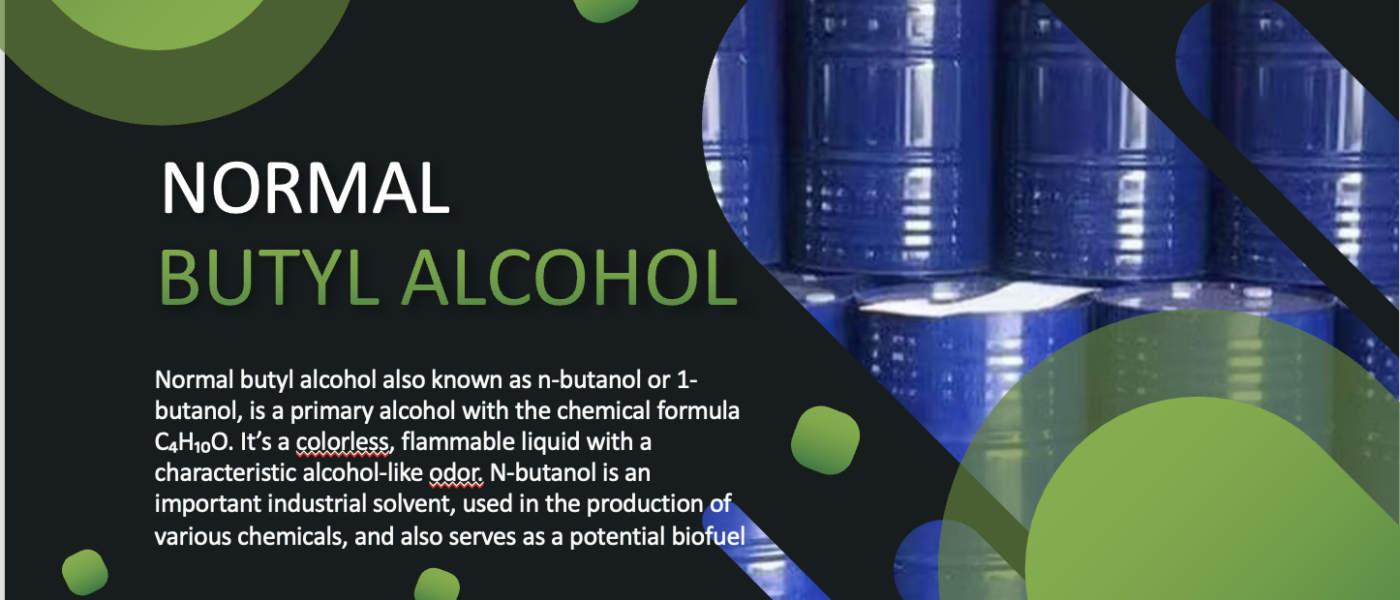
Normal butyl alcohol also known as n-butanol or 1-butanol, is a primary alcohol with the chemical formula C₄H₁₀O. It’s a colorless, flammable liquid with a characteristic alcohol-like odor. N-butanol is an important industrial solvent, used in the production of various chemicals, and also serves as a potential biofuel. In this detailed overview, we’ll examine the chemical structure, physical and chemical properties, production methods, applications, safety considerations, environmental impacts, and the role of n-butanol in emerging technologies like biofuel production.
1. Chemical Composition and Structure
N-butanol belongs to the alcohol family and has the following structure:
- Molecular Formula: C₄H₁₀O
- Molecular Weight: 74.12 g/mol
- Structure: CH₃(CH₂)₃OH
The “n-” prefix denotes that the butanol has a straight-chain structure, with the hydroxyl (-OH) group attached to the first carbon in the chain. This configuration classifies it as a primary alcohol. The presence of the hydroxyl group gives n-butanol its characteristic alcohol properties, including polarity and the ability to form hydrogen bonds.
2. Physical Properties of Normal Butyl Alcohol
N-butanol has several key physical properties that make it useful in a range of applications:
- Appearance: Clear, colorless liquid
- Odor: Characteristic alcoholic, slightly sweet odor
- Boiling Point: 117.7°C
- Melting Point: −89.5°C
- Density: 0.81 g/cm³ at 20°C
- Viscosity: 3.64 mPa·s at 20°C
- Solubility: Moderately soluble in water (73 g/L at 25°C), and fully miscible with many organic solvents such as ether, acetone, and ethanol.
- Flash Point: 35°C (closed cup)
- Vapor Pressure: 5.1 mmHg at 25°C
The relatively high boiling point of n-butanol, compared to other lower-molecular-weight alcohols, makes it less volatile and more suited to applications requiring controlled evaporation rates.
3. Production of N-Butanol
Normal butyl alcohol can be produced through several methods:
a) Petrochemical Synthesis
-
- The traditional production of n-butanol is through petrochemical synthesis, particularly by the oxo process (also known as hydroformylation). In this process:
- Propylene is reacted with carbon monoxide and hydrogen to form butyraldehyde in the presence of a catalyst, typically cobalt or rhodium-based.
- The butyraldehyde is then hydrogenated to produce n-butanol.
- This process allows for large-scale production and is the primary method used in the industrial production of n-butanol.
- The traditional production of n-butanol is through petrochemical synthesis, particularly by the oxo process (also known as hydroformylation). In this process:
b) Fermentation (Biotechnological Production)
-
- Increasingly, n-butanol is produced through fermentation, especially in efforts to create renewable biofuels. This method uses clostridial fermentation, where certain strains of bacteria (e.g., Clostridium acetobutylicum) metabolize sugars to produce n-butanol, along with other by-products like acetone and ethanol.
- This bio-based production is considered more environmentally friendly, as it uses renewable feedstocks such as corn, sugarcane, or agricultural waste.
4. Chemical Properties of Normal Butyl Alcohol
Normal butyl alcohol chemical behavior is largely defined by its hydroxyl (-OH) group, which contributes to several characteristic reactions:
- Hydrogen Bonding: The hydroxyl group enables n-butanol to form hydrogen bonds with other molecules, giving it moderate water solubility and higher boiling and melting points compared to hydrocarbons of similar size.
- Esterification: N-butanol readily reacts with carboxylic acids to form butyl esters, such as butyl acetate. This reaction is widely used in the production of solvents, flavors, and plasticizers.
- Combustion: As a flammable organic compound, n-butanol can combust in the presence of oxygen to produce carbon dioxide, water, and heat:
2C4H9OH+9O2→8CO2+10H2O
5. Applications of N-Butanol
N-butanol is versatile and finds use in a variety of industries due to its solvent properties and chemical reactivity:
a) Solvent in Paints, Coatings, and Varnishes
-
- As a moderate-evaporation solvent, n-butanol is used in the production of paints, coatings, and varnishes. It helps adjust the drying time and viscosity, allowing for smooth application.
- It is often combined with other solvents, like ethyl acetate or isopropanol, to achieve the desired evaporation rate and finish.
b) Chemical Intermediate
-
- N-butanol serves as an important intermediate in the production of other chemicals, such as butyl acetate, butyl acrylate, glycol ethers, and plasticizers like dibutyl phthalate. These derivatives are used in a variety of industrial applications, from adhesives to plastics and textiles.
c) Biofuel
-
- Due to its energy content and combustion properties, n-butanol has been studied extensively as a biofuel alternative to gasoline. It has a higher energy content than ethanol and can be blended with gasoline or used as a standalone fuel.
- N-butanol’s compatibility with existing fuel infrastructure makes it an attractive option for biofuel production, and research into its sustainable production from biomass is ongoing.
d) Pharmaceutical and Cosmetic Industry
-
- N-butanol is used as a solvent in certain pharmaceutical formulations and cosmetic products, where it helps dissolve active ingredients and control the viscosity of the product.
e) Food and Flavoring
-
- Although used sparingly, n-butanol can be a flavoring agent in some food products and beverages. Its fruity aroma can enhance certain flavors when used in trace amounts, but its primary use in the food industry is as a processing solvent rather than as a direct ingredient.
6. Safety and Handling of N-Butanol
Like many organic solvents, Normal butyl alcohol presents health and safety risks:
a) Health Hazards
-
- Inhalation: Inhalation of n-butanol vapors can cause respiratory irritation, dizziness, headache, and nausea. Prolonged exposure may lead to more serious respiratory issues.
- Skin Contact: Contact with n-butanol can cause irritation, and prolonged exposure may lead to dermatitis or drying of the skin.
- Eye Contact: N-butanol can cause eye irritation, redness, and tearing.
- Ingestion: Accidental ingestion can lead to gastrointestinal distress, nausea, vomiting, and possible effects on the nervous system.
b) Fire and Explosion Hazards
-
- N-butanol is flammable, with a flash point of 35°C, so it should be handled in well-ventilated areas, away from open flames and sources of ignition.
- Vapors can form explosive mixtures with air, so equipment should be properly grounded, and adequate ventilation should be maintained to prevent accumulation of vapors.
c) Safety Precautions
-
- Personal Protective Equipment (PPE): When handling n-butanol, protective gloves, goggles, and respirators should be worn.
- Storage: N-butanol should be stored in cool, dry, well-ventilated spaces in tightly closed containers.
- Spill Response: In the event of a spill, the area should be evacuated, and spills should be contained and cleaned up using absorbent materials.
7. Environmental Impact of N-Butanol
The environmental impact of Normal butyl alcohol depends on its source, usage, and disposal:
a) Air Pollution
-
- When released into the atmosphere, n-butanol contributes to air pollution, as it can react with other pollutants to form ground-level ozone, a component of smog.
b) Water and Soil Contamination
-
- If released into water bodies, n-butanol can pose risks to aquatic life, especially at high concentrations. It is moderately toxic to fish and other organisms.
- Spills on soil can lead to contamination, although its relatively high volatility means that some of it will evaporate before it significantly infiltrates the groundwater.
c) Biodegradability
-
- Normal butyl alcohol is readily biodegradable in soil and water, which means it is less likely to persist in the environment compared to more persistent organic pollutants. Under aerobic conditions, it breaks down over time, reducing its long-term environmental impact.
8. N-Butanol in the Biofuel Industry
N-butanol has received attention as a potential biofuel for several reasons:
- Energy Density: N-butanol has a higher energy content (29.2 MJ/L) than ethanol, making it a more efficient fuel.
- Lower Volatility: Its lower volatility makes it safer to handle and transport.
- Fuel Infrastructure Compatibility: Unlike ethanol, n-butanol is compatible with existing gasoline engines and fuel infrastructure, making it easier to incorporate as a gasoline substitute.
- Production from Biomass: Advances in biotechnology have made it possible to produce n-butanol from renewable sources, like corn or cellulosic biomass, through fermentation. This provides an alternative to fossil-fuel-derived butanol and reduces greenhouse gas emissions.
PT. Samiraschem Indonesia is Reliable Supplier and Distributor Normal butyl alcohol with High Quality Product and Good Price. We are Serving and Delivered Area such Jakarta Bandung Semarang Jogja Surabaya Medan and Batam
N-butanol is a versatile compound with applications ranging from industrial solvents to biofuel. Its solvent properties, moderate volatility, and high energy density make it valuable across numerous sectors, including paints, coatings, adhesives, pharmaceuticals, and biofuel production. Though handling n-butanol requires caution due to its health risks and flammability, its biodegradability and potential as a renewable fuel make it relatively environmentally friendly. Continued research into sustainable production methods, such as biomass fermentation, could further enhance its environmental profile and position it as an alternative to petroleum-based products.