Methylene Chloride
Methylene Chloride: A Comprehensive Overview
Introduction
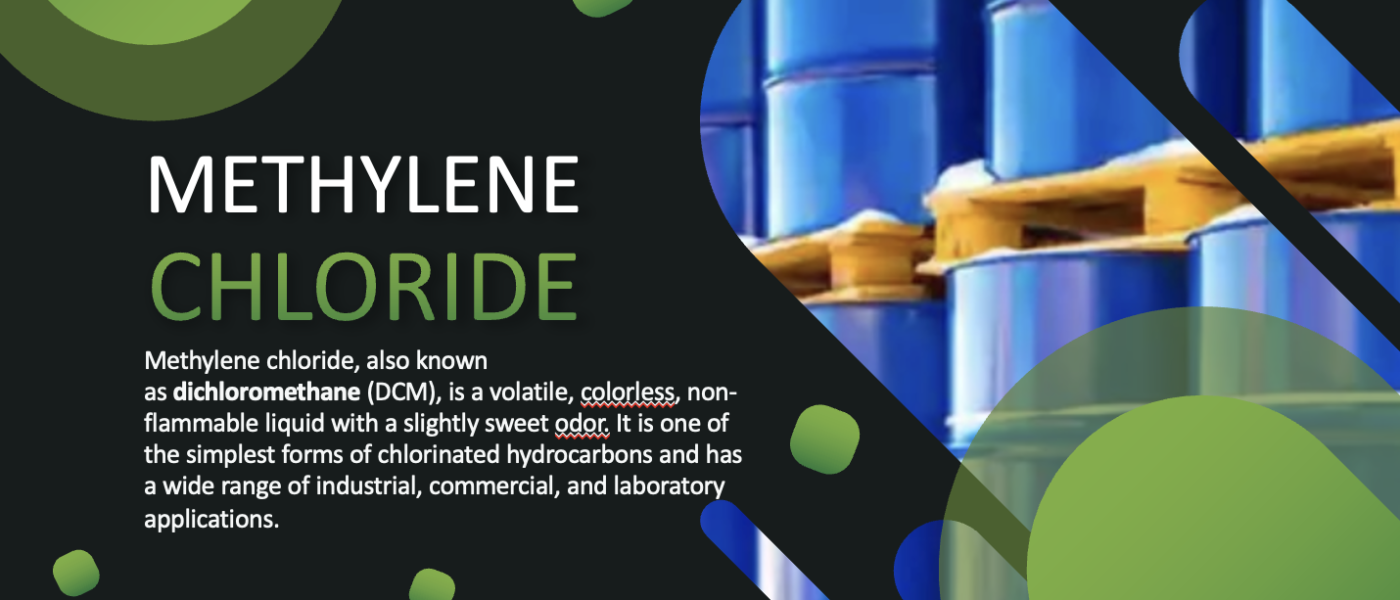
Methylene chloride, also known as dichloromethane (DCM), is a volatile, colorless, non-flammable liquid with a slightly sweet odor. It is one of the simplest forms of chlorinated hydrocarbons and has a wide range of industrial, commercial, and laboratory applications. Its molecular formula is CH₂Cl₂, and it has been used extensively in industries such as pharmaceuticals, paint stripping, degreasing, and chemical processing.
Due to its versatility as a solvent and reagent, methylene chloride is a critical substance in many fields. However, its usage is accompanied by health and environmental concerns, which has led to increasing scrutiny and regulation in recent years.
Chemical and Physical Properties
- Chemical Formula: CH₂Cl₂
- Molar Mass: 84.93 g/mol
- Appearance: Colorless liquid
- Odor: Mildly sweet
- Boiling Point: 39.6°C (103.3°F)
- Melting Point: -96.7°C (-142°F)
- Density: 1.33 g/cm³ at 20°C
- Vapor Pressure: 47.4 kPa at 20°C
- Solubility: Moderately soluble in water (1.32 g/100 mL at 20°C); miscible with most organic solvents, such as alcohol, acetone, and ether.
Production of Methylene Chloride
dichloromethane produced industrially through the chlorination of methane. This process is usually carried out in the presence of high temperatures (400°C–500°C) and ultraviolet light, which initiates a chain reaction in which chlorine atoms replace hydrogen atoms in methane. The result is a mixture of chlorinated products, including:
- Chloromethane (CH₃Cl)
- Dichloromethane (CH₂Cl₂)
- Chloroform (CHCl₃)
- Carbon tetrachloride (CCl₄)
These products are separated through a series of distillation steps. Dichloromethane is typically isolated by fractional distillation.
The reaction that forms methylene chloride is represented as: CH₄+Cl₂→CH₂Cl₂+HCl
The chlorination process is energy-intensive and produces several byproducts that must be managed to minimize waste and environmental impact.
Applications of Methylene Chloride
Methylene chloride’s solvent properties make it useful in a wide range of industrial applications. Below are some of the most important uses of methylene chloride:
1. Paint Stripping and Coating Removal
One of the primary uses of methylene chloride is in paint stripping. It is highly effective at dissolving and removing layers of paint, varnish, and coatings from surfaces such as wood, metal, and masonry. Methylene chloride’s low boiling point allows it to evaporate quickly, which aids in the removal process.
Methylene chloride-based paint strippers work by breaking down the bonds between the paint and the substrate, causing the paint to blister and soften for easy removal. It is particularly valued for its ability to remove multiple layers of paint in a short amount of time.
Despite its effectiveness, the use in paint stripping has been increasingly regulated due to its potential health risks. In some countries, restrictions have been placed on its use in consumer products.
2. Solvent in Chemical Reactions
Methylene chloride is commonly used as a solvent in chemical synthesis, particularly in the pharmaceutical and fine chemical industries. Its ability to dissolve a wide range of organic compounds makes it a valuable tool for reactions that require an inert, non-reactive medium.
Some key uses of methylene chloride as a solvent include:
- Extraction: In pharmaceuticals, it is often used to extract biologically active compounds from plant materials or other sources.
- Recrystallization: It is used to purify organic compounds by dissolving impurities at elevated temperatures and allowing the desired product to crystallize out at lower temperatures.
- Reaction Medium: Many chemical reactions, including Grignard reactions and Friedel-Crafts acylation, use methylene chloride as a solvent due to its inert nature and stability under acidic and basic conditions.
3. Pharmaceuticals
In the pharmaceutical industry, methylene chloride is used in various stages of drug development and manufacturing. It is primarily employed as a solvent in the synthesis and formulation of active pharmaceutical ingredients (APIs).
Some common uses include:
- Solvent in tablet coating: is used in the application of protective coatings on pharmaceutical tablets, which can control the release of the active ingredient and improve shelf life.
- API extraction: It is used to extract and purify raw materials during the production of APIs, ensuring that only the active components are included in the final product.
- Polymer production: In drug delivery systems, can be used to produce polymers that encapsulate drugs, providing controlled release of the medication over time.
4. Degreasing and Metal Cleaning
Methylene chloride is widely used in the metalworking industry for degreasing and cleaning metal parts. Its ability to dissolve greases, oils, waxes, and other organic materials makes it an ideal solvent for removing contaminants from metal surfaces before further processing, such as electroplating, painting, or welding.
Due to its high vapor pressure and volatility, methylene chloride evaporates quickly, leaving metal surfaces clean and free of residue. This makes it especially useful in vapor degreasing, where metal parts are suspended in a vapor bath of methylene chloride, allowing contaminants to be stripped away efficiently.
However, the use in degreasing applications has been declining due to concerns about its potential environmental and health impacts. Alternatives such as aqueous-based cleaners and less hazardous solvents are being adopted in many industries.
5. Polymer and Plastics Production
Methylene chloride is used in the manufacture of synthetic fibers like polyester and acetate, as well as cellulose acetate. It is involved in dissolving cellulose and acetate, which are then spun into fibers. This process is critical in the production of items such as textiles, films, and plastics.
Additionally, plays a role in the production of polycarbonates and polyurethane foams, where it is used as a solvent for the reactants involved in polymerization reactions. Polyurethane foams, in particular, are used in a variety of products, from furniture and insulation to packaging materials.
6. Aerosol Propellant
Methylene chloride is also used as a propellant in aerosol products. Its volatility and ability to dissolve a wide range of substances make it useful in products such as spray paints, adhesives, and personal care items.
In aerosol formulations, helps to dissolve the active ingredients and ensures they are delivered evenly when sprayed. However, due to concerns about its toxicity and environmental persistence, many aerosol formulations are transitioning away from methylene chloride in favor of safer alternatives.
7. Food and Beverage Industry
Methylene chloride has been used in the food and beverage industry for decaffeinating coffee and tea. In the decaffeination process, methylene chloride selectively extracts caffeine from coffee beans and tea leaves without affecting the flavor or other desirable components. This process has been widely used because of methylene chloride’s effectiveness and low cost.
However, due to health concerns, there has been growing consumer preference for decaffeination methods that do not involve chemical solvents, such as the Swiss Water Process or supercritical carbon dioxide extraction. Regulatory bodies such as the U.S. Food and Drug Administration (FDA) have set stringent limits on the amount of residual methylene chloride that can be present in decaffeinated products to ensure consumer safety.
Health and Safety Concerns
Methylene chloride is considered a hazardous substance and must be handled with care due to its potential health risks. Short-term and long-term exposure to methylene chloride can lead to various health effects, which have led to increased regulation and restrictions on its use.
1. Acute Exposure
Short-term or acute exposure to methylene chloride, typically through inhalation or skin contact, can cause symptoms such as:
- Dizziness
- Headaches
- Nausea
- Eye and skin irritation
- Central nervous system depression
- Coughing and respiratory irritation
Due to its ability to rapidly evaporate at room temperature, inhalation is the primary route of exposure. In high concentrations, methylene chloride can lead to loss of consciousness and even death due to its depressant effect on the central nervous system.
2. Chronic Exposure
Chronic exposure to methylene chloride over extended periods has been associated with more severe health effects, including:
- Liver and kidney damage: Repeated exposure to methylene chloride can result in the accumulation of toxic metabolites in the body, potentially leading to liver and kidney damage.
- Carcinogenicity: classified as a potential human carcinogen. Prolonged exposure to high levels has been shown to increase the risk of cancer, particularly in the liver, lungs, and brain.
- Cardiovascular effects: Chronic exposure can exacerbate cardiovascular problems, particularly in individuals with pre-existing conditions. Methylene chloride is metabolized to carbon monoxide in the body, which reduces the blood’s ability to carry oxygen.
3. Occupational Hazards
Workers in industries that use methylene chloride, such as paint stripping, chemical manufacturing, and metal cleaning, are at particular risk of exposure. Personal protective equipment (PPE), including respirators, gloves, and eye protection, is essential to minimize the risks associated with methylene chloride exposure.
Employers are required to adhere to strict workplace exposure limits set by regulatory bodies such as the Occupational Safety and Health Administration (OSHA) and the European Chemicals Agency (ECHA) to protect workers from the harmful effects of methylene chloride.
Environmental Impact
Methylene chloride poses environmental risks as well. Its high volatility means that it readily evaporates into the atmosphere, where it can contribute to air pollution. Although it has a relatively short atmospheric lifetime compared to other volatile organic compounds (VOCs), methylene chloride can still contribute to the formation of ground-level ozone (a component of smog) and may have long-term impacts on air quality.
When released into water bodies, can have adverse effects on aquatic life. It is moderately soluble in water and can persist in aquatic environments for extended periods, potentially contaminating drinking water supplies. Regulatory agencies closely monitor the environmental release of methylene chloride to mitigate its impact on ecosystems.
Regulatory Framework
Due to its health and environmental risks, methylene chloride is subject to various regulations and restrictions around the world:
- In the United States, the Environmental Protection Agency (EPA) has imposed restrictions on the use of methylene chloride in consumer paint strippers. In 2019, the EPA banned the sale of methylene chloride-based paint strippers for consumer use, although it remains available for commercial applications.
- In the European Union, is regulated under the REACH (Registration, Evaluation, Authorization, and Restriction of Chemicals) framework. The use of methylene chloride in paint strippers has been banned in the EU since 2010, and workplace exposure limits have been established to protect workers from its harmful effects.
Despite these regulations, methylene chloride continues to be used in many industrial processes due to its effectiveness and versatility.
Alternatives to Methylene Chloride
Given the health and environmental concerns associated with methylene chloride, industries are increasingly seeking safer alternatives. Some potential substitutes for methylene chloride include:
- Aqueous-based solvents: These water-based solvents are less toxic and pose fewer environmental risks. They are used in applications such as degreasing and cleaning.
- N-Methyl-2-pyrrolidone (NMP): NMP is an alternative solvent for paint stripping and chemical processes, although it is not entirely free from health concerns.
- Supercritical carbon dioxide: This is a non-toxic, environmentally friendly alternative used in decaffeination and extraction processes.
- Soy-based solvents: These biodegradable solvents are gaining popularity in paint stripping and cleaning applications.
The search for alternatives is ongoing, particularly in industries such as pharmaceuticals and chemical manufacturing, where its unique properties are difficult to replace.
PT. Samiraschem Indonesia is Reliable Supplier and Distributor Methylene chloride with High Quality Product and Good Price. We are Serving and Delivered Area such Jakarta Bandung Semarang Jogja Surabaya Medan and Batam
Methylene chloride is a widely used chemical with numerous applications across diverse industries, from pharmaceuticals and chemical synthesis to paint stripping and metal cleaning. Its effectiveness as a solvent and reagent has made it indispensable in many industrial processes. However, the health risks associated with exposure to methylene chloride, along with its environmental impact, have led to increased regulation and the search for safer alternatives.
As industries move toward more sustainable and environmentally friendly practices, may see reduced usage in favor of less hazardous substances. However, given its unique properties, methylene chloride will likely remain an important tool in specific industrial and laboratory settings, albeit under stricter safety guidelines and regulatory oversight.