Isobutyl Acetate
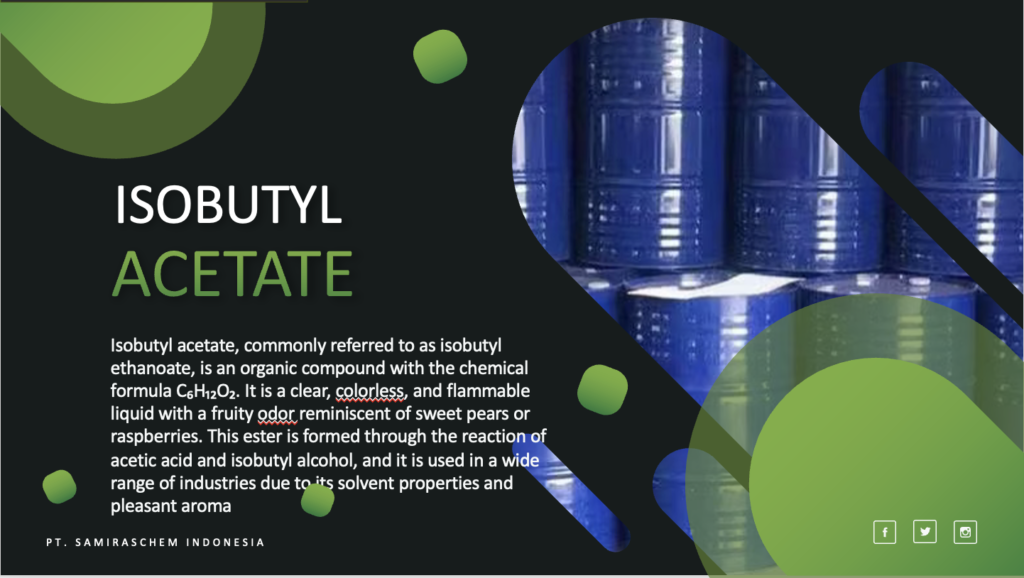
Isobutyl acetate, commonly referred to as isobutyl ethanoate, is an organic compound with the chemical formula C₆H₁₂O₂. It is a clear, colorless, and flammable liquid with a fruity odor reminiscent of sweet pears or raspberries. This ester is formed through the reaction of acetic acid and isobutyl alcohol, and it is used in a wide range of industries due to its solvent properties and pleasant aroma. Isobutyl acetate is a key ingredient in paints, coatings, adhesives, and in the flavor and fragrance industry. In this detailed overview, we will examine its chemical structure, properties, production, applications, safety considerations, and environmental impact.
1. Chemical Composition and Structure
Isobutyl acetate is a member of the ester family and has a branched structure compared to its straight-chain counterpart, n-butyl acetate. Here are some of its defining characteristics:
- Molecular Formula: C₆H₁₂O₂
- Molecular Weight: 116.16 g/mol
- Structure: CH₃COOCH₂CH(CH₃)₂
The structure of i-butyl acetate consists of an acetate group (CH₃COO-) attached to an isobutyl group (CH₂CH(CH₃)₂). The branching in the isobutyl group makes isobutyl acetate different from n-butyl acetate in its physical properties, particularly its solubility, boiling point, and evaporation rate.
2. Physical Properties of Isobutyl Acetate
physical characteristics make it suitable for use as a solvent in various applications. Key physical properties include:
- Appearance: Colorless, clear liquid
- Odor: Fruity, sweet, similar to raspberries or pears
- Boiling Point: 117-118°C
- Melting Point: -99°C
- Density: 0.869 g/cm³ at 20°C
- Viscosity: Approximately 0.69 mPa·s at 20°C
- Solubility: Low water solubility (0.7 g/100 mL at 25°C); miscible with most organic solvents such as alcohols, ethers, and ketones
- Flash Point: Approximately 18°C (closed cup)
- Vapor Pressure: 15 mmHg at 20°C
The low water solubility and moderate vapor pressure of isobutyl acetate make it a useful solvent for water-insoluble materials, and its rapid evaporation rate is especially advantageous in applications requiring quick drying.
3. Production of Isobutyl Acetate
can be synthesized via esterification, where isobutyl alcohol (C₄H₁₀O) reacts with acetic acid (CH₃COOH) in the presence of an acid catalyst. The reaction proceeds as follows:
CH3COOH+CH3CH2CH(CH3)OH→CH3COOCH2CH(CH3)2+H2O
This reaction generally takes place under the following conditions:
- Catalyst: A strong acid like sulfuric acid is often used to accelerate the esterification reaction.
- Reaction Conditions: Heating the mixture and applying continuous distillation to remove water, which shifts the reaction equilibrium toward ester formation.
- Purification: After the reaction, the mixture may be distilled to obtain high-purity isobutyl acetate, separating it from unreacted alcohol and acid.
Industrial synthesis often utilizes continuous distillation to remove water as it forms, thereby enhancing the yield of isobutyl acetate.
4. Applications
widely used across different industries due to its solvent properties, fast drying time, and pleasant fragrance. Major applications include:
a) Paints, Coatings, and Varnishes
-
- Isobutyl acetate is a common solvent in the paint and coatings industry due to its excellent solubility for resins and polymers, which helps control the viscosity and drying time of paints.
- It is frequently used in automotive, architectural, and industrial coatings to achieve a smooth, even finish and fast drying times.
b) Printing Inks
-
- In the printing industry, used in inks due to its quick-drying nature, which prevents smudging and improves print clarity. It is particularly effective in flexographic and gravure printing, where high-quality ink adhesion is crucial for clarity on paper, plastics, and other substrates.
c) Adhesives and Sealants
-
- Isobutyl acetate is used as a solvent in adhesives and sealants, where it dissolves various polymers and helps control the consistency and drying time of products like glue and cement.
- Adhesives using isobutyl acetate are commonly applied in industries that require rapid adhesive setting, such as packaging and furniture assembly.
d) Fragrances and Flavorings
-
- Due to its fruity aroma, used in the fragrance industry as a component in perfumes and colognes, where it adds a light, pleasant scent.
- In the flavoring industry, isobutyl acetate is used in artificial flavors for foods and beverages. Its pear and raspberry-like flavor is used to enhance candies, chewing gum, and beverages.
e) Cleaning Products and Degreasers
-
- As a solvent with moderate polarity, isobutyl acetate can dissolve oils, waxes, and other nonpolar materials, making it an effective cleaning agent in industrial and household degreasers.
5. Chemical Properties
The chemical reactivity of isobutyl acetate is largely governed by its ester functional group, which undergoes typical ester reactions:
- Hydrolysis: In the presence of water and an acid or base catalyst, isobutyl acetate can hydrolyze back into acetic acid and isobutyl alcohol. This reaction can occur more readily in aqueous environments, where esters are susceptible to breakdown.
- Combustion: As a flammable organic compound, isobutyl acetate can combust to produce carbon dioxide, water, and heat when exposed to oxygen and an ignition source.
The general combustion reaction is:
2 C6H12O2+17 O2→12 CO2+12 H2O
6. Safety and Handling of Isobutyl Acetate
requires careful handling due to its flammability and health risks associated with inhalation and skin exposure.
a) Health Hazards
-
- Inhalation: Inhalation of isobutyl acetate vapors can cause respiratory irritation, headaches, dizziness, and nausea. In high concentrations, prolonged exposure may lead to more severe respiratory issues and nervous system effects.
- Skin Contact: Direct skin contact with isobutyl acetate may cause irritation or dryness, particularly with prolonged or repeated exposure.
- Eye Contact: Exposure to the eyes can result in irritation, redness, and tearing.
- Ingestion: Ingestion can cause gastrointestinal distress, nausea, vomiting, and abdominal discomfort.
b) Fire and Explosion Hazards
-
- Isobutyl acetate is highly flammable, with a flash point of approximately 18°C. It should be kept away from open flames, sparks, and sources of heat.
- Its vapors are heavier than air and can accumulate in low-lying areas, forming explosive mixtures with air. Proper ventilation and safe storage in cool, dry, flame-resistant containers are essential.
c) Safety Precautions
-
- Personal Protective Equipment (PPE): Protective gloves, goggles, and respiratory protection should be used when handling isobutyl acetate.
- Storage: It should be stored in a cool, dry, and well-ventilated area, away from sources of ignition, heat, and incompatible substances like strong oxidizing agents.
- Spill Response: In case of a spill, the area should be ventilated, and absorbent materials can be used to contain the liquid. Avoid using open flames or electrical equipment that might cause a spark.
7. Environmental Impact of Isobutyl Acetate
The environmental impact of isobutyl acetate is generally lower than that of many other solvents due to its biodegradability, but it still poses certain risks if released into the environment in large amounts.
a) Air Pollution
-
- When released into the air, isobutyl acetate contributes to air pollution and may participate in reactions with other pollutants, forming ground-level ozone and smog. Its high vapor pressure means that it can easily evaporate, contributing to volatile organic compound (VOC) emissions.
b) Water Contamination
-
- Although isobutyl acetate is poorly soluble in water, it can still contaminate water bodies, affecting aquatic organisms at high concentrations. Proper disposal and spill containment are essential to prevent it from entering rivers, lakes, or groundwater.
c) Soil Contamination
-
- In soil, may evaporate or biodegrade over time, as it is relatively biodegradable under aerobic conditions. This reduces its long-term persistence, though it can still pose hazards if it infiltrates soil and groundwater.
8. Regulatory Considerations and Environmental Compliance
To minimize environmental and health impacts, regulatory bodies have set guidelines for the safe handling, storage, and disposal of isobutyl acetate:
- Occupational Exposure Limits (OEL): Many countries have established permissible exposure limits for isobutyl acetate in the workplace, typically around 150-200 ppm over an eight-hour period.
- Environmental Regulations: Isobutyl acetate is regulated as a VOC, and industries using it must adhere to emission control standards and environmental guidelines to limit its release into the atmosphere.
- Waste Disposal: Waste containing isobutyl acetate must be disposed of according to hazardous waste guidelines to prevent contamination of soil and water sources.
PT. Samiraschem Indonesia is Reliable Supplier and Distributor Isobutyl acetate with High Quality Product and Good Price. We are Serving and Delivered Area such Jakarta Bandung Semarang Jogja Surabaya Medan and Batam
Isobutyl acetate is a highly versatile solvent with a wide range of industrial applications, from paints and coatings to fragrances and flavorings. Its physical properties, particularly its pleasant odor, moderate boiling point, and solvent capacity, make it a popular choice across various sectors. While isobutyl acetate is generally safe when used with appropriate precautions, its flammability and potential health risks require careful handling and adherence to safety guidelines. As a biodegradable compound, its environmental impact is less severe than some solvents, but proper handling, storage, and disposal are essential to mitigate its potential hazards. With growing emphasis on sustainable chemistry, the continued use of isobutyl acetate in regulated environments highlights its importance as a valuable industrial solvent with controlled environmental implications.