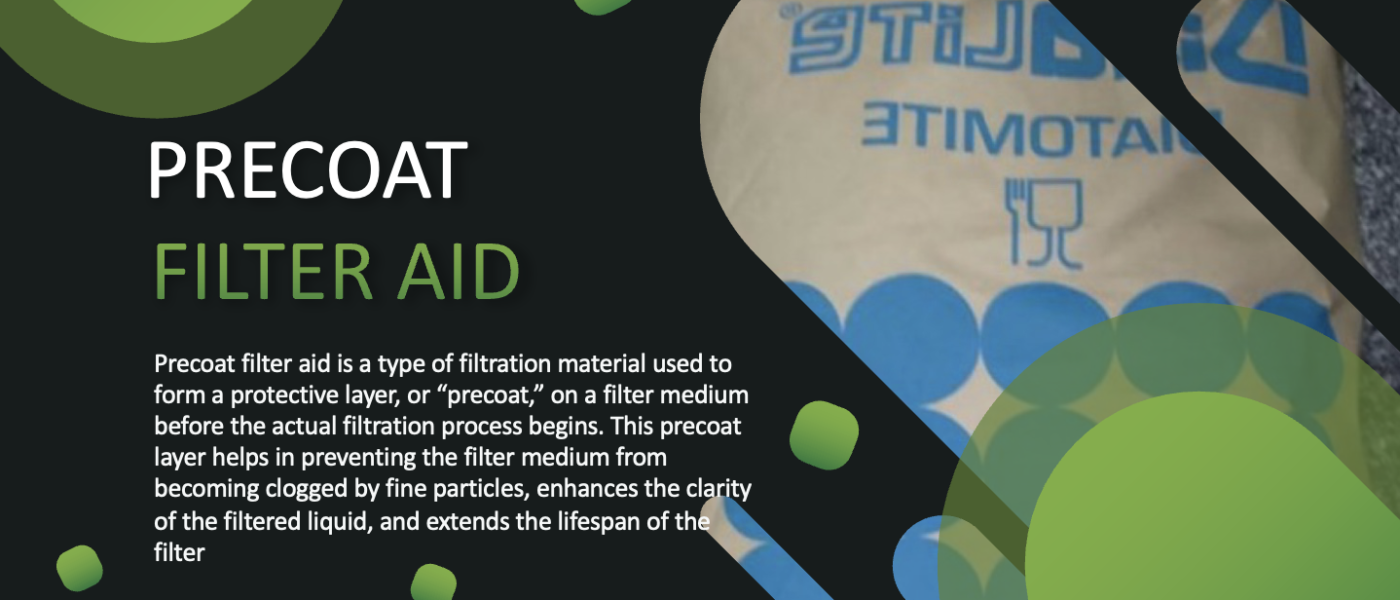
Precoat Filter Aid
Precoat filter aid is a type of filtration material used to form a protective layer, or “precoat,” on a filter medium before the actual filtration process begins. This precoat layer helps in preventing the filter medium from becoming clogged by fine particles, enhances the clarity of the filtered liquid, and extends the lifespan of the filter.
Key Features of Precoat :
- Formation of Precoat Layer:
- The precoat filter aid is mixed with a liquid and then circulated through the filtration system, allowing to deposit on the surface of the filter medium (e.g., filter cloth, screens, or membranes). This forms a porous, uniform layer that serves as the first barrier to contaminants.
- Types of Precoat :
- Diatomaceous Earth (Diatomite): A widely used precoat material due to its high porosity and filtration efficiency.
- Perlite: A volcanic glass that is expanded and used as a lightweight filter aid.
- Cellulose: A natural, organic material used in certain applications where a less abrasive precoat is needed.
- Benefits of Using Precoat :
- Improved Filtration Efficiency: The precoat layer traps fine particles, improving the clarity of the filtered liquid.
- Protection of Filter Medium: The precoat layer prevents the filter medium from being directly exposed to contaminants, reducing clogging and extending the filter’s life.
- Consistent Filtration Quality: Precoat helps in maintaining a consistent flow rate and filtration quality throughout the process.
- Easy Cake Discharge: The precoat layer aids in the easy removal of the filter cake (accumulated solids) at the end of the filtration cycle.
- Applications of Precoat Filter Aid:
- Beverage Industry: Used in the clarification of beer, wine, and juices to remove haze-forming particles and improve product stability.
- Pharmaceuticals: Applied in the filtration of liquid drugs, vaccines, and other pharmaceutical products to ensure purity and safety.
- Chemical Processing: Used in the filtration of chemicals, acids, and solvents to remove impurities and ensure product quality.
- Water Treatment: Employed in the purification of water to remove suspended solids, turbidity, and microorganisms.
- How to Use Precoat Filter Aid:
- Precoat Formation: A slurry of the precoat filter aid is prepared and circulated through the filtration system, allowing it to deposit evenly on the filter medium.
- Continuous Filtration: Once the precoat layer is formed, the actual filtration process begins, with the liquid to be filtered passing through the precoat layer.
- Filter Cake Removal: After the filtration cycle is complete, the filter cake (the retained solids) is removed, and a new precoat layer is applied if necessary for the next cycle.
- Considerations When Using Precoat Filter Aid:
- Compatibility: Ensure the chosen precoat material is compatible with the liquid being filtered to avoid any chemical reactions.
- Thickness of Precoat: The thickness of the precoat layer should be optimized based on the filtration requirements. Too thick a layer may reduce flow rates, while too thin a layer may lead to inadequate filtration.
- Slurry Preparation: The slurry should be well-mixed to avoid uneven coating on the filter medium.
Conclusion:
Precoat filter aids play a crucial role in enhancing the efficiency and effectiveness of filtration processes across various industries. By forming a protective and porous layer on the filter medium, they help in achieving clear, high-quality filtration while protecting the filter system from clogging and wear. Proper selection and use of precoat filter aids can significantly improve the performance and longevity of filtration systems.